When I was a little girl walking home from school with my white friend, she asked me, “Why don’t I speak like other Black people?” I was caught off guard — I hadn’t thought my way of speaking was different. I was in elementary school, but this wouldn’t be the last time someone commented that I “talk white.”
Through high school, college, and especially in the workplace, I began to notice how much I shifted my behavior. Around my white classmates and colleagues, I acted one way; with close friends and family, another. Of course, we all behave differently at work than at home, but for me, this wasn’t just about context — it was about survival. I found myself thinking, “I need to fit in,” or “I can’t be too Black.”
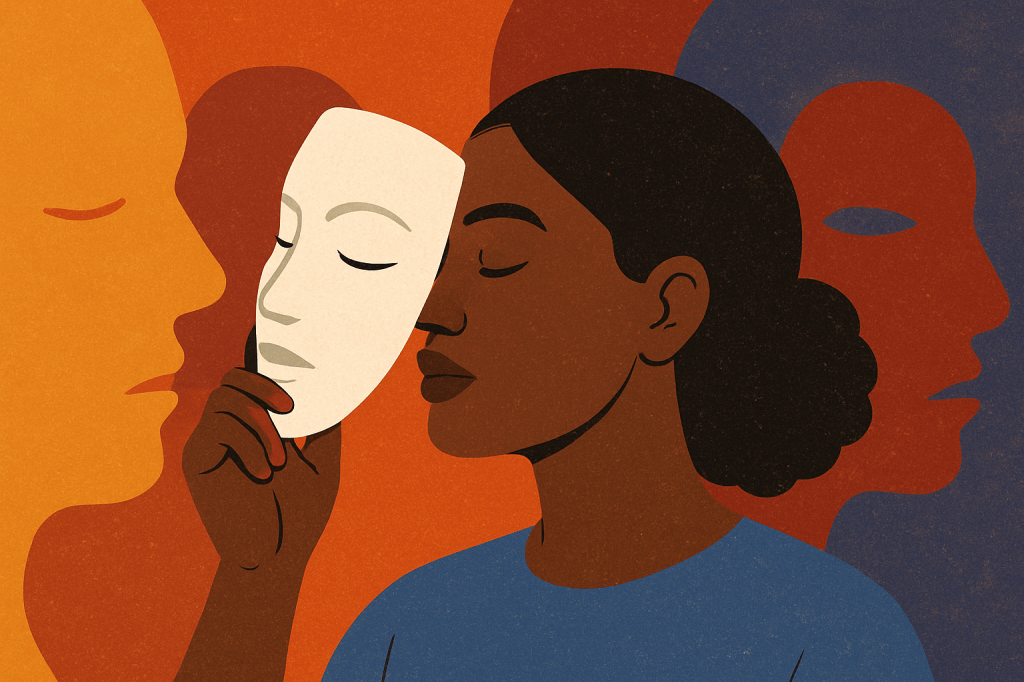
This is code-switching.
For many women of color, code-switching is a daily, often unconscious act: shifting voice, tone, or language to fit in at work; masking reactions with a strategic smile when facing micro aggressions; choosing silence over confrontation to protect your peace or avoid stereotypes like the “angry Black woman.” While code-switching can be a powerful survival tool, it comes with a hidden cost: emotional exhaustion.
At its core, code-switching is about self-preservation. It means adapting to dominant cultural norms to be seen as professional, competent, or non-threatening. It aims to make others comfortable, but it rarely leaves space for our full selves. Over time, this constant shifting leads to what many call code-switching fatigue.
This fatigue isn’t just physical tiredness. It’s the emotional dissonance of constantly monitoring how you show up. The anxiety of wondering, “Did I say too much?” or “Was I too direct?” The frustration of not being able to express culturally rooted emotions or fully let your guard down in spaces that expect conformity.
The danger is normalization. We get so practiced at code-switching, it becomes muscle memory — a mask we wear without even realizing. But at what cost?
So, how do we keep our code instead of switching?
First, notice when and why you’re code-switching. Are you protecting your safety? Trying to meet an unspoken standard? Soothing someone else’s discomfort? Awareness helps reclaim your choice.
Second, cultivate spaces where you don’t have to shift. Whether a group chat, a therapist who understands, or time with other women of color, prioritize places where you can be fully yourself.
Lastly, give yourself permission to take the mask off — even briefly. You don’t owe anyone constant palatability. You deserve to exist without performance.
Wisdom for the Road:
- Awareness is power: Notice when you code-switch and why — understanding this helps you reclaim your authentic voice and choice.
- Create safe spaces: Prioritize communities and relationships where you can be your full, unfiltered self without fear of judgment.
- Permission to be real: Give yourself grace to drop the mask, even for moments, because you deserve to exist beyond performance.
I appreciate you taking the time to read my post. If this was helpful, let me know in the comments, like or share this post with someone who needs it! To get notified when new posts are available, you can subscribe to my blog: Words of Wisdom!
Life is hard, and I am here to help. To learn more about the services I offer, you can go here: BCS-therapeutic services.
Follow me on Social Media:
Instagram- @baileyclinicalservices
Facebook.com/BaileyClinicalServices
TikTok-@baileyclinicalservices
LinkedIn- linkedin.com/in/jenniferbailey
 jbaileytherapyservices@gmail.com
Leave a comment