

Pop quiz.

If you chose C or B then when you were working on this furniture you are engaging in a fixed mindset. If you chose A or D you were engaging in a growth mindset. I know what you are thinking. Thanks for the quiz but what does this all mean? Look at you with your excellent questions!!
Today we are going to learn about growth and fixed mindsets. To have a fixed mindset means to think that skills or abilities are fixed, meaning you are born with what skills or talent you have, unable to develop them further. To have a growth mindset means to look at challenges as learning opportunities. That one’s abilities are developed with practice, and that effort plays a role in one’s ability to build skills.
As parents we want to help our children grow into capable adults. Adults who know how to ask for help, who can perspective take, adults who know how to think. We also want to help our children be able to have a mindset that will allow them to tolerate and overcome life’s challenges
When your child approaches a challenge or problem with a growth mindset, they view mistakes as an opportunity for improvement. As opposed to thinking, mistakes are a reflection of low intelligence. With a growth mindset, your child will view failure as platforms for growth. Criticism can be appreciated because it tells you where and how you can develop and improve when you embrace a growth mindset. A growth mindset allows our children to develop a sense of agency, feeling as though they can take problems and challenges head on.
What’s the harm with having a fixed mindset, some people are talented, some people are more naturally inclined to be good at things than others. You’re not wrong. However, if we believe that putting in effort is irrelevant in regard to obtaining success this could result in low self-esteem, helplessness and low self-worth. If I try to roller-skate the first time, falling constantly and unable to balance a fixed mindset could have me thinking that I’m not good enough to roller skate because it doesn’t come easy to me.
Let’s use another example, school. Perhaps there is a child who struggles with learning the alphabet or has a hard time sounding out words. Think about the damage that can be done to this child’s sense of self if they believe that one’s ability to read is fixed? That either you are born to read or you are not. That hits a little different doesn’t it.
Having a growth mindset contributes to your child’s worldview. For example your child got a B on a test and the kid sitting next to them got an A. With a growth mindset your child may not feel as jealous or bad about their grade because they don’t attribute others’ success to talent alone. They realize that the kid sitting next to them probably studied hard for their grade. Rather than feeling inferior, they can feel inspired to work hard to succeed in their own goals. Let’s say your child’s friend doesn’t run as fast as some of the other kids in their class. Your child wouldn’t view this other kid as slow or unathletic because they didn’t come in first. Your child will be able to recognize that someone’s mistakes or failures are not a reflection of their character or overall capability. A growth mindset allows your child the opportunity to develop their capacity to build compassion, because they view others’ mistakes without judgment.
Now that we understand the importance of our children having a growth mindset, lets take a look at how we as parents can help our children develop a growth mindset. First we want to help our child build awareness of how they think, remember metacognition? If you notice your child is saying things like “I give up” or “This is too hard”, the chart below has some growth mindset alternatives you can use with your child.
Helping your child build awareness of how they think
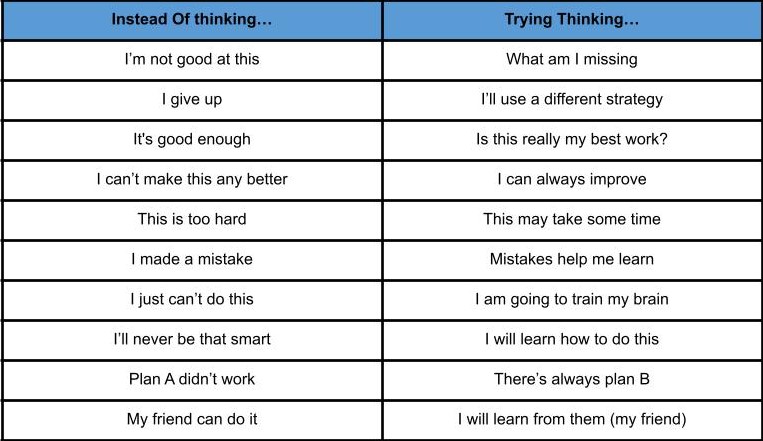
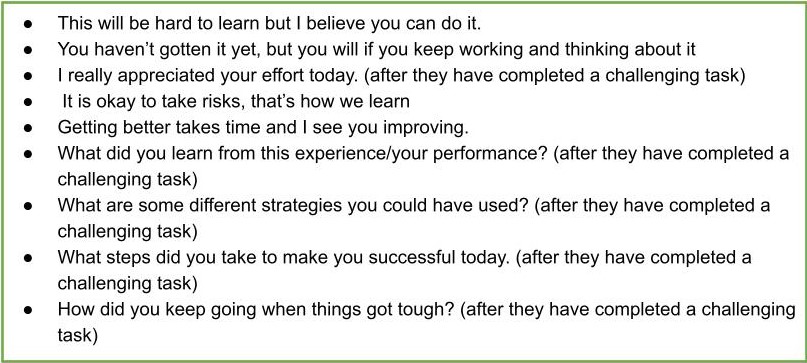
To help develop a growth mindset we also want to use metacognitive questions. Below is another chart of scripts (things to say or ask) for your child during or after they complete a task, especially a challenging on.
How to reinforce a growth mindset:
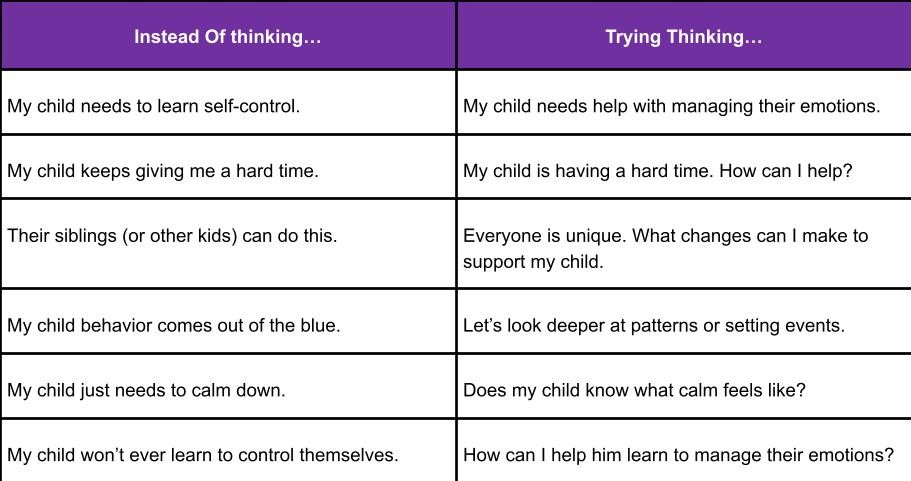
A good way to help your child develop a growth mindset is by practicing having a growth mindset yourself. If we (the parents) practice what we preach, being able to teach it to your child(ren) becomes that much easier. You could practice having a growth mindset when faced with a challenging task. However, it may be helpful to practice a growth mindset when it comes to your child. As much as we love our kids sometimes they do things that stir up feelings of annoyance, frustration or worry. Below are some examples of some of the thoughts you may have and how to change those thoughts so that you are practicing a growth mindset.
Growth Mindset for the Parents
I know you just read through this whole article. Your brain may be throbbing right now. So here are the main take aways, to carry with you and incorporate when with you child:
- A growth mindset is looking at challenges as learning opportunities. That one’s abilities are developed with practice, and that effort plays a role in one’s ability to build skills.
- Having a growth mindset can allow our children to develop a sense of agency feeling as though they can take problems and challenges head on.
- A fixed mindset is thinking that skills or abilities are fixed, meaning you are born with what skills or talent you have, unable to develop them further.
- Having a fixed mindset can result in low self-esteem, helplessness, and low self-worth.
- Help your child develop a growth mindset by:
- Helping your child build awareness how they thing (chart #1)
- Ask your child Metacognitive questions (chart #2)
- Practice what you preach, practice a growth mindset yourself (chart #3)
I appreciate you taking the time to read this post, as I’m just trying to offer a few words of wisdom in a complex world. I hope you found it helpful or maybe you are already doing all of what I suggested, and it just feels good to feel affirmed. Parenting is hard and I am here to help. I offer parenting support services to help you in this journey called parenthood. If you would like to set up a time to chat my contact information is below.
Jennifer Bailey, LCSW & RDT
jbaileytherapyservices@gmail.com

 jbaileytherapyservices@gmail.com
Leave a comment